
Real Estate
Construction Bans Need Worker-Centric Plans for Maharashtra
By GeoSquare News Desk · Published 2026-11-28
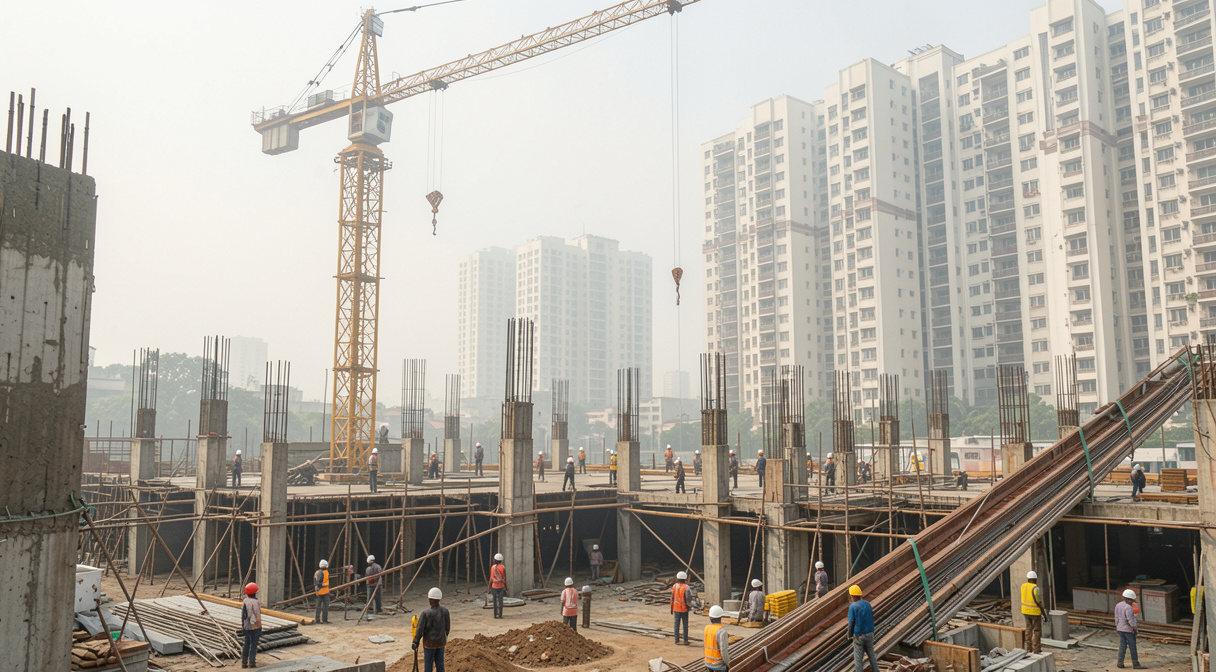
Construction bans imposed during severe air-quality episodes have once again put the spotlight on the real estate sector. A leading industry body has stressed that any shutdown plan must include a clear strategy for the workers whose livelihoods depend on site activity. While the Commission for Air Quality Management (CAQM) revoked Stage III restrictions on 17 November, the pattern of sudden stoppages remains a concern for developers and homebuyers alike.
Why worker welfare matters
When sites close at short notice, daily-wage labourers bear the first and harshest impact. Many migrate between cities, and a sudden loss of income can push them out of the construction workforce. For Maharashtra, where residential projects in Mumbai, Pune, and the broader Mumbai Metropolitan Region rely on migrant labour, maintaining a stable workforce is essential to meet delivery timelines.
Impact on property delivery
Developers point out that recurring restrictions create a ripple effect: material supply gets disrupted, project schedules slip, and interest costs rise. For buyers, this often means delayed possession and added uncertainty. A transparent shutdown framework, with advance notice and welfare measures, can help reduce such risks and keep the market confident.
What should change
Governments and developers need to jointly prepare for all three stages of air-quality alerts. This means planning alternative work schedules, ensuring wage support for affected workers, and communicating realistic timelines to buyers. Industry bodies have also called for better coordination between environment regulators and urban development authorities before such curbs are imposed.
For Maharashtra, the lesson is clear: construction activity cannot be switched off and on without a humane plan. A balanced approach—protecting air quality while safeguarding wages and project commitments—will benefit both the workforce and the state’s property market.