
Micro-Markets Driving Maharashtra's Residential Growth Boom
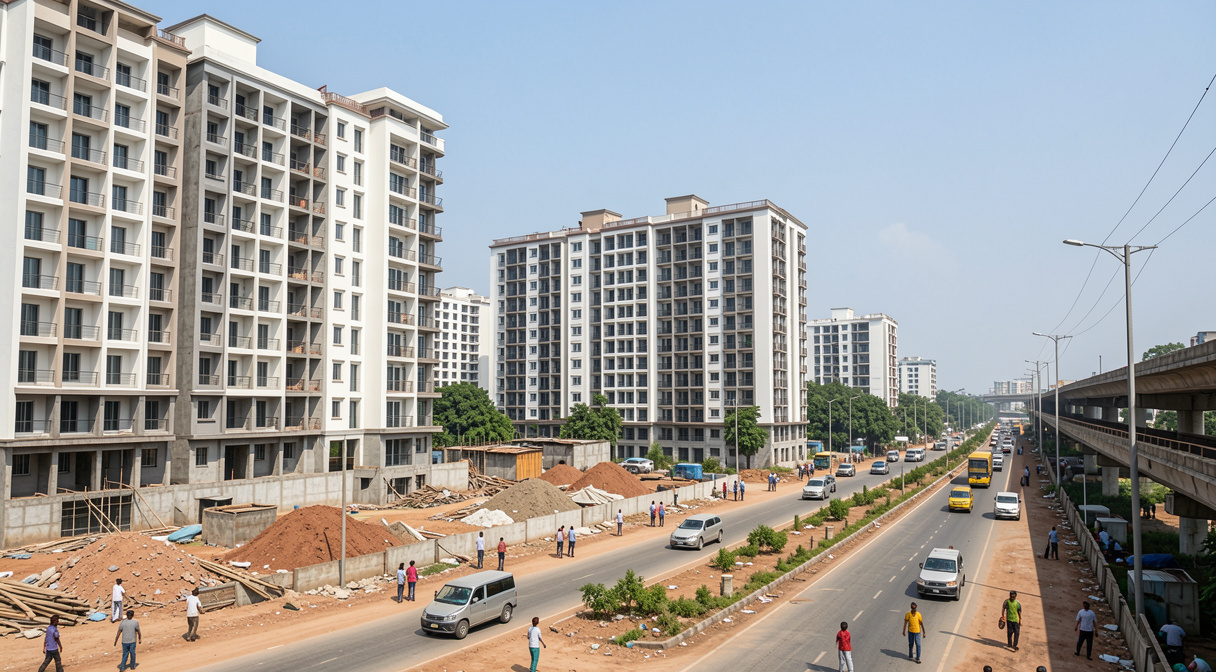
Forget broad metro trends. The real action in Maharashtra's property market is in specific, high-growth micro-markets. Investors and buyers should focus their search here for better returns.
Key points at a glance
- •🏘️ Residential growth is now led by specific city micro-markets, not entire metros.
- •📈 These pockets offer higher growth potential than the broader city average.
- •🔍 Buyers in Maharashtra should research localities like Thane, Navi Mumbai, and Pune's outskirts.
- •💡 Investment strategies are shifting towards hyper-local data and infrastructure projects.
- •🏗️ New supply and demand are concentrating in these targeted, high-growth zones.
- •📊 Data shows micro-markets outperforming traditional residential hubs.
Growth Pattern
Residential demand is no longer uniform. Specific micro-markets within cities like Mumbai, Pune, and Nagpur are seeing faster absorption and price growth than the city average.
Key Locations
Focus on areas near new infrastructure—like metro corridors in Pune or upcoming expressways in Navi Mumbai. These are the emerging hotspots for residential projects.
Investor Angle
For Maharashtra investors, the data suggests a shift. Hyper-local market analysis, including RERA project data and local infrastructure timelines, is now essential for spotting the next growth driver.
Want more detail?
What actually happened?
India's residential market is being reshaped by high-growth micro-markets within cities, not by metropolitan-wide trends. In Maharashtra, this means pockets like Thane's Ghodbunder Road or Pune's Hinjewadi are outperforming broader city metrics.
This shift is driven by localized infrastructure projects, new supply, and specific demand clusters, creating distinct growth corridors within the same city.
- Micro-markets are defined by specific localities with their own demand-supply dynamics.
- Growth is measured by absorption rates and price appreciation, not just city-wide averages.
- Infrastructure like new metro lines or expressways often kickstarts a micro-market's rise.
What it means for buyers
For Maharashtra property buyers, this means the old advice of 'buy in the city' is outdated. You need to identify which specific micro-market is on the upswing. This requires checking local RERA approvals, upcoming infrastructure, and builder track records in that pocket.
Focusing on these areas can mean better value for money and higher appreciation potential compared to saturated central locations.
- Research hyper-local factors: new schools, hospitals, and transport links.
- Compare prices within a 5-10 km radius to find value.
- Look for RERA-registered projects in these emerging zones for security.
What to watch next
The trend will likely intensify in Maharashtra as more infrastructure projects come online, like the Mumbai-Ahmedabad bullet train corridor or Pune's expanding metro network. These will create new micro-markets overnight.
Investors and buyers should track infrastructure announcements and RERA project registrations in specific localities to stay ahead of the curve.
- Monitor infrastructure updates from MMRDA, PMRDA, and state government.
- Watch for new RERA project launches in identified micro-markets.
- Keep an eye on absorption rates and inventory levels in these pockets.
More stories for you
Real Estate India
4-Month Extension for Maharashtra Projects Hit by West Asia Crisis

Real Estate India
Innov8 Founder Ritesh Malik Buys ₹85 Cr Delhi Bungalow
Real Estate India
Royal Green Realty Appoints Deepak Khemchandani as CFO in Gurugram

Real Estate India
Chhattisgarh RERA Gets 2-Year Tax Exemption: What It Means
Real Estate India
Andheri West's Lashkaria Indrasukh Nears Completion, Metro-Connected Sky Decks
Real Estate India
3,318 km Border Highways: Maharashtra Real Estate Boost
Real Estate India
Brigade's ₹400 Cr Project on Kanakapura Road, Bangalore
Real Estate India
