
Real Estate India
Mumbai Coastal Road, Metro Corridors Reshape Property Market
By GeoSquare News Desk · Published 2026-10-18
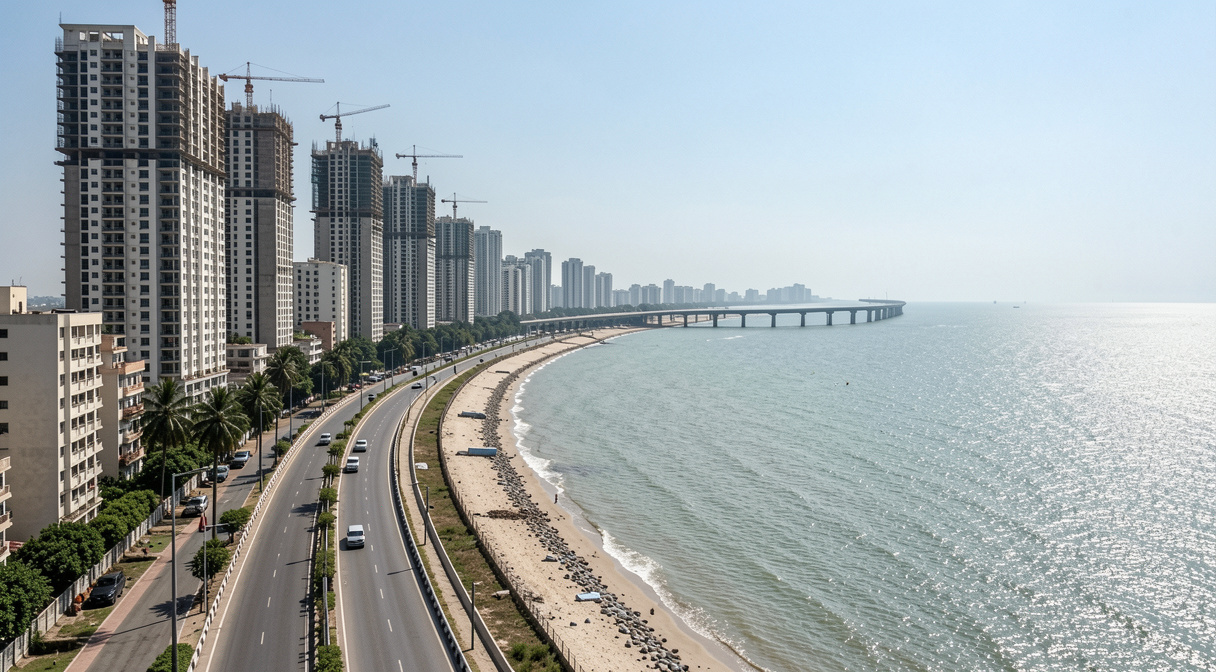
Mumbai's infrastructure push — led by the Coastal Road and a network of metro corridors — is quietly rewriting the city's real estate map. Well-connected suburbs along these routes are seeing renewed developer interest, fresh launches and a measure of price stability after a turbulent few years.
Coastal Road: the big connectivity play
The Mumbai Coastal Road, linking the city's western seaboard, has cut travel times dramatically and drawn attention to stretches that were earlier considered peripheral. Land parcels along the alignment and its interchanges are attracting mid-to-premium residential projects, with developers betting on improved livability to support pricing.
Metro corridors extend the market's reach
Lines such as Metro 2A, 2B and 7, along with upcoming phases, are easing the commute to established business districts. Micro-markets around metro stations in the western and eastern suburbs are recording stronger enquiry levels, and affordable-to-mid-segment launches are riding on transit access.
Market resilience in 2024
Mumbai's overall property market showed resilience through 2024, with healthy sales volumes driven by end-user demand, competitive home loan rates and a preference for ready or near-completion inventory. RERA-registered launches have kept supply disciplined, helping prices hold firm rather than surge.
What it means for buyers and investors
For homebuyers, infrastructure-led micro-markets offer a practical trade-off: better commute times at rates that can still be lower than established premium pockets. Investors should weigh proximity to operational metro stations and completed road links over announced-but-undelivered projects, and factor in realistic rental demand from the improved connectivity.