
Real Estate India
Maharashtra TOD Policy: Higher FSI Near Metro Stations to Boost Realty
By GeoSquare News Desk · Published 2026-10-22
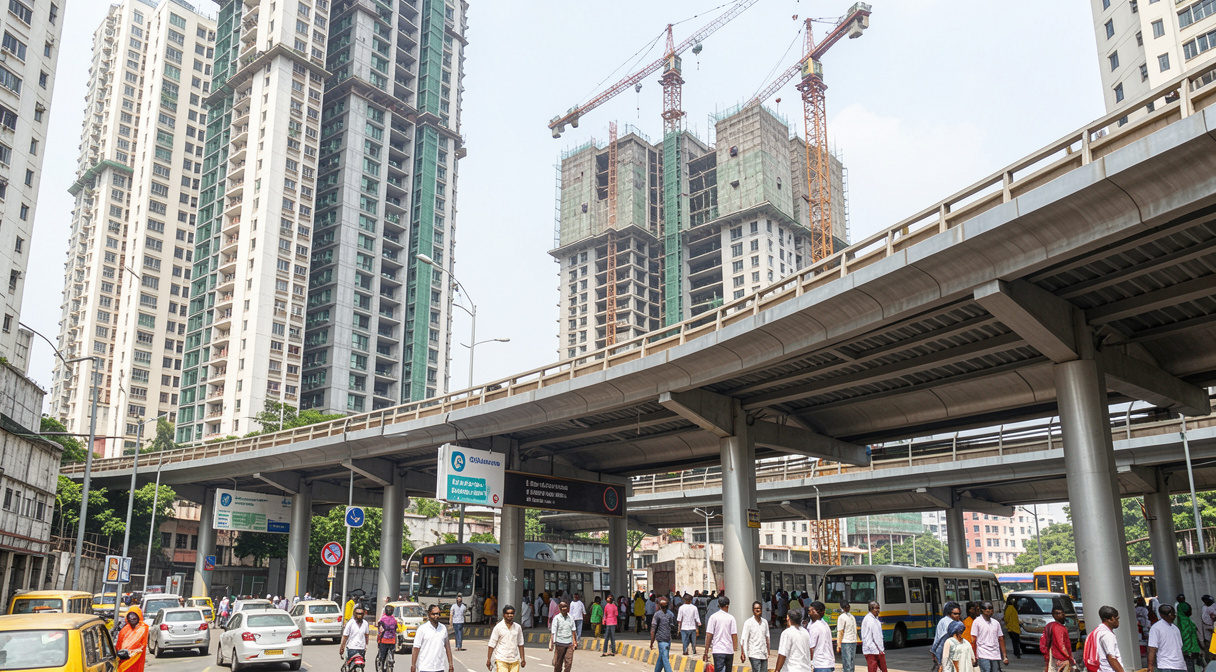
The Maharashtra government's Transit-Oriented Development (TOD) policy is set to reshape the real estate landscape around metro corridors in Mumbai and Pune. By allowing higher Floor Space Index (FSI) within a 500-metre radius of metro stations, the policy aims to encourage high-density, mixed-use development in these key urban nodes.
What the Policy Offers
Under the TOD framework, developers can now build with increased FSI, making it viable to construct taller and more densely packed residential and commercial projects. The focus is on walkable, transit-accessible neighbourhoods that reduce dependence on private vehicles and optimise land use near public transport hubs.
Impact on Mumbai and Pune
For Mumbai, the policy opens up new possibilities for redevelopment and infill projects along the metro network. In Pune, where metro expansion is gaining pace, the TOD norms are expected to attract significant investment in high-rise apartments, office spaces, and retail centres. Land parcels that were earlier underutilised are now likely to see renewed interest from developers.
Opportunities for Investors and Developers
Investors can look at properties near metro stations as high-growth assets, given the potential for capital appreciation and rental demand. Developers, on the other hand, can leverage the increased FSI to maximise project viability and deliver more units in prime locations. The policy is also expected to boost infrastructure-led growth in tier-2 and tier-3 pockets along the metro routes.
As the state moves towards implementation, stakeholders are advised to study the detailed guidelines and align their project plans accordingly. The TOD policy is a significant step towards sustainable urban development in Maharashtra's two largest cities.